



NOD1
NOD1 (nucleotide-binding oligomerization domain-containing protein 1) is a cytosolic pattern-recognition receptor of the NOD-like receptor family that detects specific peptidoglycan-derived muropeptides, particularly meso-diaminopimelic acid-containing structures that are enriched in Gram-negative bacteria[1][2]. Upon ligand recognition, NOD1 undergoes oligomerization and recruits RIPK2 through CARD-CARD interactions, thereby activating NF-κB and MAPK signaling pathways that drive inflammatory and antimicrobial gene expression[3][4]. Through this signaling axis, NOD1 contributes to innate immune defense, regulation of host-microbe interactions, and maintenance of tissue immune homeostasis[3][5]. Mechanistically, NOD1 signaling is also linked to autophagy induction and antimicrobial responses, supporting intracellular pathogen control in epithelial and immune cells[5][3]. In disease-related settings, dysregulated NOD1 activation has been associated with inflammatory disorders and metabolic abnormalities, highlighting its relevance as a model pathway for studying chronic inflammation and host defense mechanisms[5][6]. Compared with the closely related isoform NOD2, which recognizes muramyl dipeptide and contains two N-terminal CARD domains, NOD1 recognizes distinct peptidoglycan motifs and possesses a single CARD domain, indicating nonredundant functions in microbial sensing and downstream signaling[1][3]. For experimental applications, synthetic NOD1 agonists based on iE-DAP-containing motifs are widely used to activate NOD1-dependent pathways, whereas pharmacological inhibition of NOD1-RIPK2 signaling has emerged as a useful strategy for dissecting inflammatory mechanisms and evaluating therapeutic targets in preclinical models[2].
References:
- [1]. Girardin SE, et al. Nod1 detects a unique muropeptide from gram-negative bacterial peptidoglycan. Science. 2003 Jun 6;300(5625):1584-7. [Content Brief]
- [2]. Jakopin Ž. Nucleotide-binding oligomerization domain (NOD) inhibitors: a rational approach toward inhibition of NOD signaling pathway. J Med Chem. 2014 Aug 28;57(16):6897-918. doi: 10.1021/jm401841p. Epub 2014 Apr 22. PMID: 24707857. et al. Nucleotide-binding oligomerization domain (NOD) inhibitors: a rational approach toward inhibition of NOD signaling pathway. J Med Chem. 2014 Aug 28;57(16):6897-918. [Content Brief]
- [3]. Strober W, et al. Signalling pathways and molecular interactions of NOD1 and NOD2. Nat Rev Immunol. 2006 Jan;6(1):9-20. [Content Brief]
- [4]. Caruso R, et al. NOD1 and NOD2: signaling, host defense, and inflammatory disease. Immunity. 2014 Dec 18;41(6):898-908. [Content Brief]
- [5]. Moreira LO, et al. NOD1 and NOD2 Signaling in Infection and Inflammation. Front Immunol. 2012 Nov 8;3:328. [Content Brief]
- [6]. Tang R, et al. NOD1: a metabolic modulator. Front Endocrinol (Lausanne). 2025 Jan 21;15:1484829. [Content Brief]
-
NOD1 Related Products (19)
Related Products (19)

- 1
-
TriDAP dihydrochloride
 0 ImagesCat. No.: HY-P5522APurity: 98.65%Synonyms: L-Ala-γ-D-Glu-meso-diaminopimelic acid dihydrochlorideTriDAP dihydrochloride (L-Ala-γ-D-Glu-meso-diaminopimelic acid dihydrochloride) is a NOD1 agonist with a Kd value of 34.5 μM. TriDAP dihydrochloride enhances the binding of NOD1-RICK, promotes RICK phosphorylation, and activates the NF-κB, TAK1, MEK/ERK, p38 and interferon response pathways. TriDAP dihydrochloride downregulates Runx2 via increasing ubiquitination and reduces trabecular bone parameters. TriDAP dihydrochloride decreases IκBα levels and increases p65 levels. TriDAP dihydrochloride induces the secretion of proinflammatory mediators IL-8 and prostaglandins, triggers tissue inflammation and innate immune activation, and inhibits SARS-CoV-2 replication in lung epithelial cells. TriDAP dihydrochloride increases the RANKL/OPG ratio in mice, reduces bone mass and enhances osteoclast activity, and inhibits new bone formation by decreasing the mineralization deposition rate in mice. TriDAP dihydrochloride can be used in research related to pulpitis, chronic ulcerative colitis, Crohn's disease and SARS-CoV-2 infection.
-
C12-iE-DAP hydrochloride
 0 ImagesCat. No.: HY-P5524ASynonyms: Lauroyl-γ-D-glutamyl-meso-diaminopimelic acid hydrochloride; γ-D-glutamyl-meso-diaminopimelic acid hydrochlorideC12-iE-DAP hydrochloride (Lauroyl-γ-D-glutamyl-meso-diaminopimelic acid hydrochloride) is a highly potent and selective NOD1 agonist, with an EC50 of 0.027 nM in HEK-Blue cells expressing human NOD1. C12-iE-DAP hydrochloride activates the NOD1/RIPK2 signaling pathway and its downstream p38 MAPK and NF-κB, induces the expression of inflammatory mediators such as IL6 and IL8, and exerts synergistic effects with TLR4, Dectin-1 or Mincle signaling. C12-iE-DAP hydrochloride can be used in studies related to vascular inflammation, tumor metastasis and neuroinflammation.
-
NOD2 antagonist 1
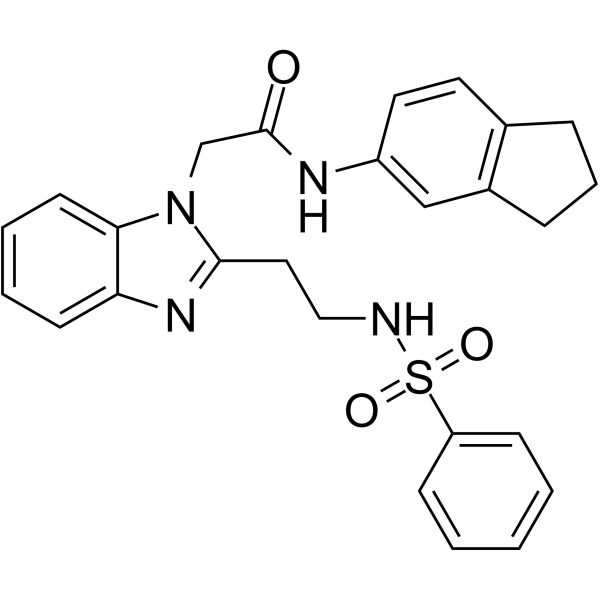 0 ImagesNOD2 antagonist 1 is a selective NOD2 antagonist with an IC50 of 5.23 μM. NOD2 antagonist 1 acts directly on the NOD2 protein, downregulates the secretion of pro-inflammatory cytokines such as IL-8 and TNF-α, and inhibits the synergistic cross-response of inflammation mediated by NOD2 and TLR4. NOD2 antagonist 1 can be used in studies related to immunity and inflammation.


-
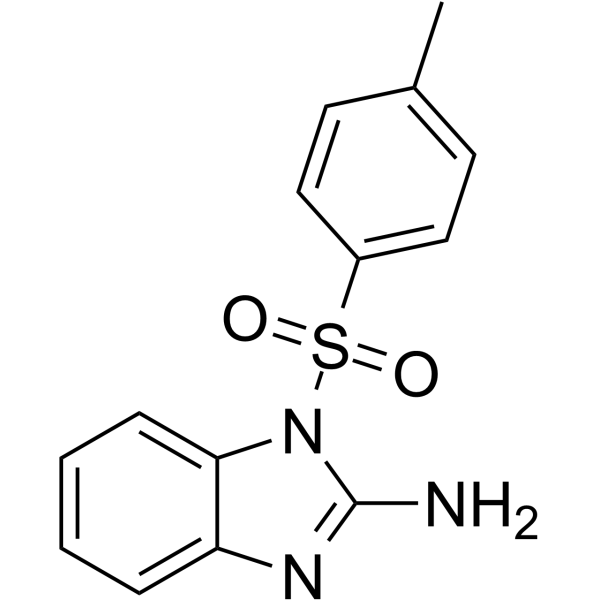
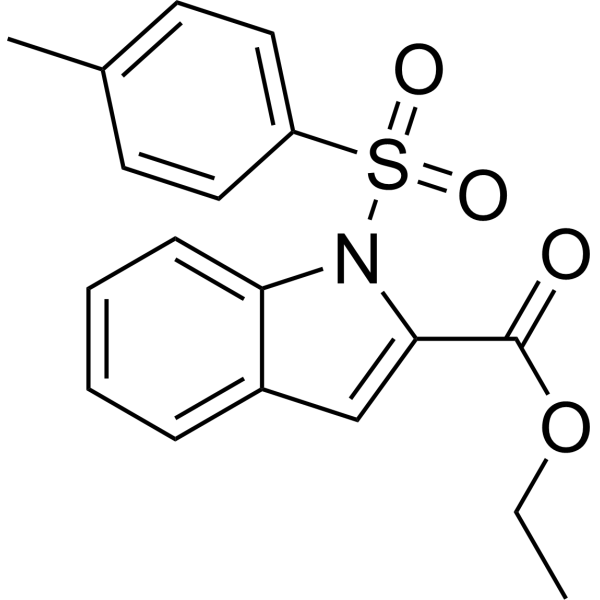
NOD1/2-IN-1
 0 ImagesCat. No.: HY-168024NOD1/2-IN-1 (Compound 18) is a potent RIPK2 inhibitor with an IC50 value of 1.4 nM, as determined by the ADP-Glo assay. NOD1/2-IN-1 blocks the production of pro-inflammatory cytokines by inhibiting the NOD1/NOD2 pathways, with IC50 values of 18 nM and 170 nM for NOD1 and NOD2, respectively, thereby reducing inflammatory responses. NOD1/2-IN-1 can be used in studies related to colitis.
-
NOD1-IN-1
 0 ImagesCat. No.: HY-168023CAS No.: 687627-78-7NOD1/-IN-1 (Compound 2) is a potent RIPK2 inhibitor with an IC50 value of 0.65 nM determined by ADP-Glo assays. NOD1/-IN-1 selectively inhibits the NOD1 pathway (with an IC50 of 33 nM for NOD1), blocking the production of pro-inflammatory cytokines and thereby reducing inflammation. NOD1/-IN-1 is applicable for research in the field of colitis.
-
NOD1 antagonist-1
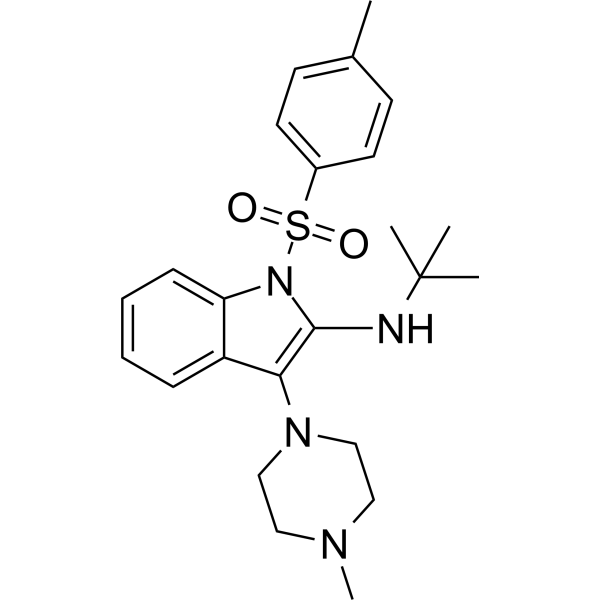 0 ImagesCat. No.: HY-163274CAS No.: 3030588-37-2

-
TriDAP
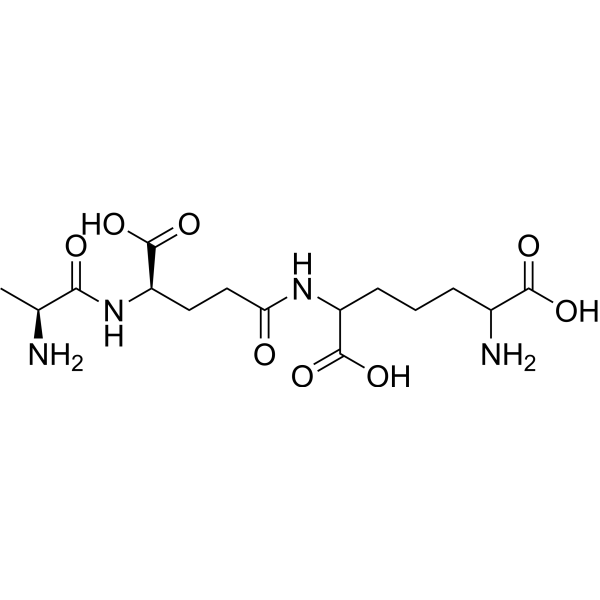 0 ImagesCat. No.: HY-P5522CAS No.: 877462-71-0Synonyms: L-Ala-γ-D-Glu-meso-diaminopimelic acidTriDAP (L-Ala-γ-D-Glu-meso-diaminopimelic acid) is a NOD1 agonist with a Kd value of 34.5 μM. TriDAP enhances the binding of NOD1-RICK, promotes RICK phosphorylation, and activates the NF-κB, TAK1, MEK/ERK, p38 and interferon response pathways. TriDAP downregulates Runx2 via increasing ubiquitination and reduces trabecular bone parameters. TriDAP decreases IκBα levels and increases p65 levels. TriDAP induces the secretion of proinflammatory mediators IL-8 and prostaglandins, triggers tissue inflammation and innate immune activation, and inhibits SARS-CoV-2 replication in lung epithelial cells. TriDAP increases the RANKL/OPG ratio in mice, reduces bone mass and enhances osteoclast activity, and inhibits new bone formation by decreasing the mineralization deposition rate in mice. TriDAP can be used in research related to pulpitis, chronic ulcerative colitis, Crohn's disease and SARS-CoV-2 infection.
-
CSLP43
 0 ImagesCat. No.: HY-123925CAS No.: 2244988-80-3CSLP43 is a selective RIPK2 and XIAP inhibitor with an IC50 of 19.9 nM against human RIPK2. CSLP43 binds to the ATP-binding pocket of RIPK2 and disrupts the interaction between RIPK2 and the BIR2 domain of XIAP or cIAP1. CSLP43 inhibits RIPK2 ubiquitination, NOD1-dependent inflammatory signaling pathways, NOD2-dependent inflammatory signaling pathways, as well as NF-κB activation associated with NOD agonists. CSLP43 is selective for the NOD1/NOD2 signaling pathway and does not inhibit the kinase activity of RIPK1 or RIPK3. CSLP43 is applicable to research related to Crohn's disease, Blau syndrome, early-onset sarcoidosis and early-onset inflammatory bowel disease.
-
C12-iE-DAP
 0 ImagesCat. No.: HY-P5524CAS No.: 1269619-57-9Synonyms: Lauroyl-γ-D-glutamyl-meso-diaminopimelic acid; γ-D-glutamyl-meso-diaminopimelic acidC12-iE-DAP (Lauroyl-γ-D-glutamyl-meso-diaminopimelic acid) is a highly potent and selective NOD1 agonist, with an EC50 of 0.027 nM in HEK-Blue cells expressing human NOD1. C12-iE-DAP activates the NOD1/RIPK2 signaling pathway and its downstream p38 MAPK and NF-κB, induces the expression of inflammatory mediators such as IL6 and IL8, and exerts synergistic effects with TLR4, Dectin-1 or Mincle signaling. C12-iE-DAP can be used in studies related to vascular inflammation, tumor metastasis and neuroinflammation.
-
NOD1/2 antagonist-1
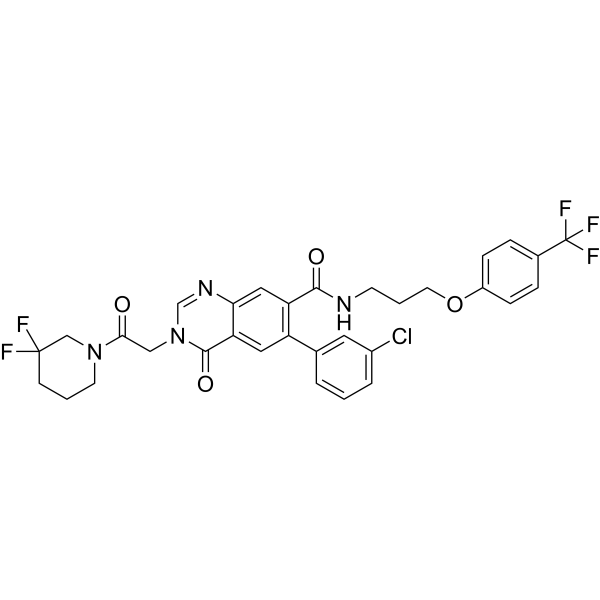 0 ImagesCat. No.: HY-146034CAS No.: 2704623-69-6NOD1/2 antagonist-1 (compound 36b) is a potent NOD1/2 (nucleotide-binding oligomerization domain-like receptor 1/2) dual antagonist, with IC50 values of 1.13 (NOD1) and 0.77 μM (NOD2), respectively. NOD1/2 antagonist-1 has a acceptable T1/2 (67.6 min). NOD1/2 antagonist-1 (compound 36b) can improve the antitumor efficacy of Paclitaxel (PTX).
-
NOD1/2 antagonist-2
 0 ImagesCat. No.: HY-101927CAS No.: 2101736-25-6
-
C14-Tri-LAN-Gly
 0 ImagesCat. No.: HY-178899CAS No.: 1863978-06-6C14-Tri-LAN-Gly is a highly selective and potent NOD1 agonist. C14-Tri-LAN-Gly activates NOD1. C14-Tri-LAN-Gly inhibits the expression of cleaved-caspase3. C14-Tri-LAN-Gly upregulates A20 expression. C14-Tri-LAN-Gly protects mice from lethal hepatitis by inhibiting hepatocyte Apoptosis. C14-Tri-LAN-Gly inhibits osteoblastogenesis and promots osteoclastogenesis.
-
C14-Ala-D-Glu-(γ-meso)-LAN-Gly(OH)
 0 ImagesCat. No.: HY-184814CAS No.: 1863978-69-1Synonyms: C14-A-iE-LAN-GC14-Ala-D-Glu-(γ-meso)-LAN-Gly (OH) (C14-A-iE-LAN-G) is a NOD1 agonist and immunomodulator. C14-Ala-D-Glu-(γ-meso)-LAN-Gly (OH) promotes IL-10 production in cells. C14-Ala-D-Glu-(γ-meso)-LAN-Gly (OH) is applicable to research related to experimental autoimmune encephalomyelitis and colitis.
- 1



